

Web templates are an important tool for website developers. By automatically inserting content into web templates, website developers and content providers of large web portals achieve high levels of productivity, and they produce webpages that are more usable thanks to their uniformity.
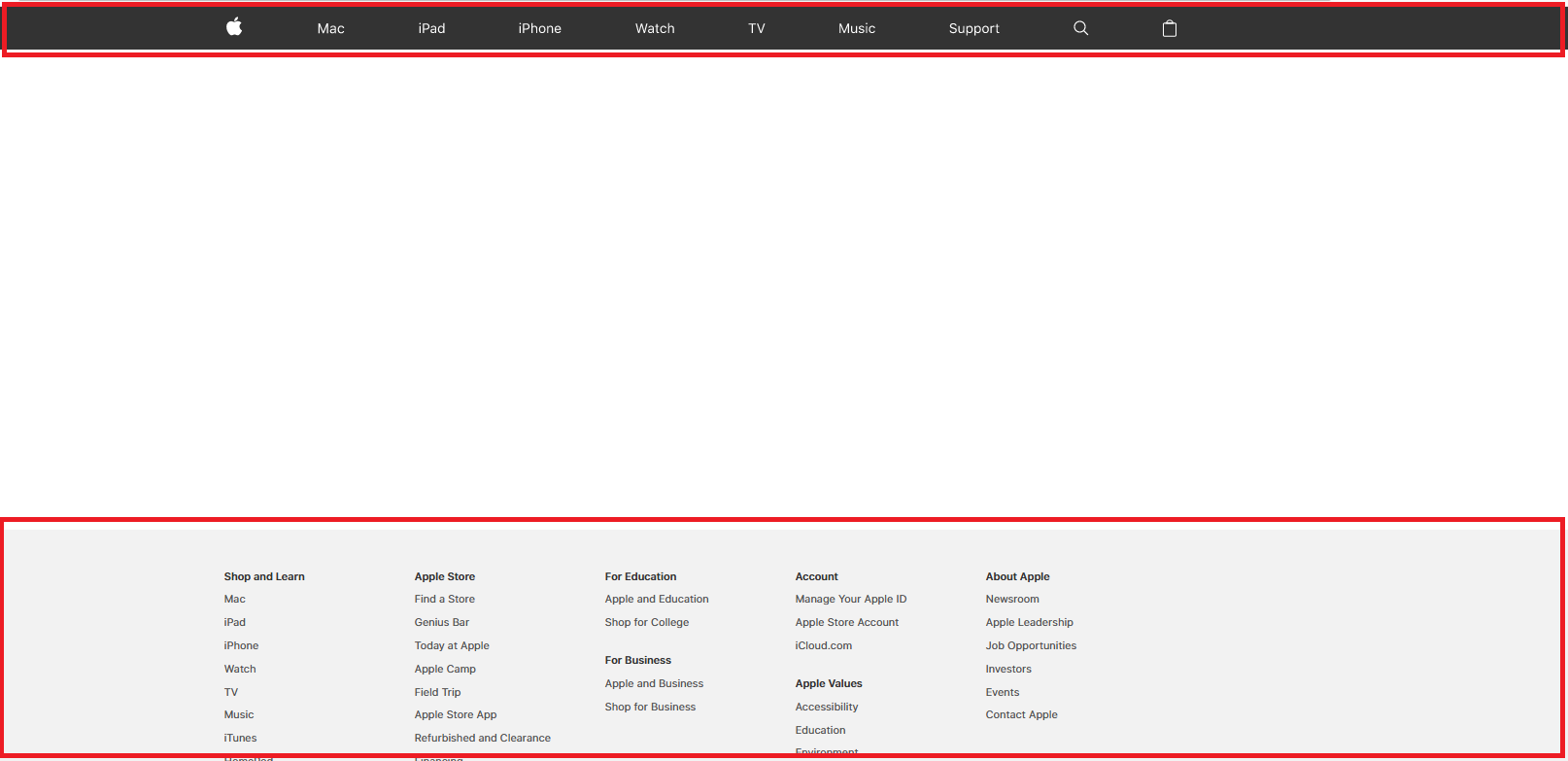
This tool implements a new technique for template extraction. It is useful for:
- Website developers, because they can automatically extract a clean HTML template of any webpage. This is particularly interesting to reuse components of other webpages.
- Other systems and tools, such as indexers or wrappers, as a preliminary stage. Extracting the template allows them to identify the structure of the webpage and the topology of the website by analyzing the navigational information of the template.

In addition, the template is useful to identify page lets, repeated advertisement panels, and what is particularly important, the main content.
The tool uses the menus of a website to identify a set of webpages that share the same template with a high probability. Then, it uses the DOM structure of the webpages to identify the blocks that are common to all of them. These blocks together form the template.
One important advantage of the tool is performance. The tool only loads a small set of webpages (an average of seven) to extract the template.
This technique could be also used for content extraction. Detecting the template of a webpage is very helpful to detect the main content. Firstly, the main content must be formed by DOM nodes that do not belong to the template. Secondly, the main content is usually inside one of the pagelets of the template that are more centered and visible, and with a higher concentration of text.