Make it simple with paraphrases: automated paraphrasing for authoring
aids and machine translation
Anabela Barreiro - Centre for Linguistics
at the Universidade do
Porto, Portugal
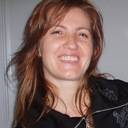
For the past few years,
researchers have been trying to achieve automated paraphrasing to respond to
the commercial enterprises’ goal to include paraphrases in their text
processing tools, authoring aids, style editors, learning tools, etc. The
benefits of paraphrasic knowledge to
natural language processing have been quantified in areas such as
question answering, information extraction, text mining, summarization,
language generation, plagiarism detection, and machine translation. In this
seminar, I will describe paraphrases (sensu latus and in linguistics) and present different types of
paraphrase (referential, lexical, phrasal, syntactic, lexical-syntactic,
multiword units). I will also discuss the elements that play a key role in
paraphrasing and stress the importance of paraphrasing for machine translation
(especially paraphrasing of multiword units). Finally, I will introduce SPIDER,
a System for Paraphrasing In Document Editing and
Revision, which it is currently being integrated into a educational program for
a cyber-school project. SPIDER was designed to help with content writing
optimization, but its applicability extends to machine translation pre-editing.
Short bio:
Anabela Barreiro is a computational linguist with
a Ph.D. in Linguistics from the Universidade do
Porto, having performed part of her scientific research at
Anabela's PhD dissertation: "Make it simple
with paraphrases: automated paraphrasing for authoring aids and machine
translation" addresses the problem of formalizing and automating
paraphrases of multi-word units and exemplifies how paraphrases can be
efficiently employed by authoring aids to help simplify and clarify texts,
presenting obvious benefits to linguistic quality assurance in text processing.
The dissertation emphasizes the positive impact of paraphrasing in machine
translation.