Molecular cages for biological applications
Vicente Martí Centelles current research interests focuses on supramolecular systems based on molecular cages for advancing the field of cancer therapy. The project will develop molecular cages with tailored properties for biological applications. The project is funded by the Plan Gen-T: Generació Talent from the local goverment Generalitat Valenciana (Vicente Martí-Centelles page at Plan Gen-T: Generació Talent, Generalitat Valenciana)
In this research line, we aim to develop molecular cage systems to encapsulate drugs for biological applications, for example in cancer therapy. To achieve this ambitious goal we focus on the cage design, starting from the geometry of the building blocks to achieve the desired cage geometry.

Resarch Team
PI: Dr. Vicente Martí-Centelles
-

Vicente Martí Centelles
Dr. V. Martí-Centelles graduated in Chemistry with honors in 2007 (Univ. Jaume I, Spain). He got a Spanish Ministry of Education grant to develop his PhD on new pseudopeptidic macrocyclic hosts for molecular recognition under the supervision of Profs. S.V. Luis and. M.I. Burguete at Univ. Jaume I with two research stays with C. Cativiela (Univ. Zaragoza) and R. Vilar (Imperial College London). He received his PhD with honors in 2012. He got a postdoctoral grant from the Generalitat Valenciana in 2013 to work at Univ. Jaume I (Prof. S.V. Luis), Oxford Univ. (Prof. P.D. Beer) and the company Biotica (Legionella detection). Then he joined the Paul Lusby research group at Univ. of Edinburgh in 2015. In October 2018 he moved to Univ. Bordeaux / CNRS to work in the Nathan McClenaghan research group as a Marie Curie fellow. In 2020 Dr. Martí obtained a CIDEGENT Distinguished researcher from Generalitat Valenciana to develop his own project on molecular cages for cancer therapy as principal investigator at Instituto de Reconocimiento Molecular y Desarrollo Tecnologico (IDM), Universidad Politécnica de Valencia.
Postdoctoral Researcher: Alfredo López Olvera
-
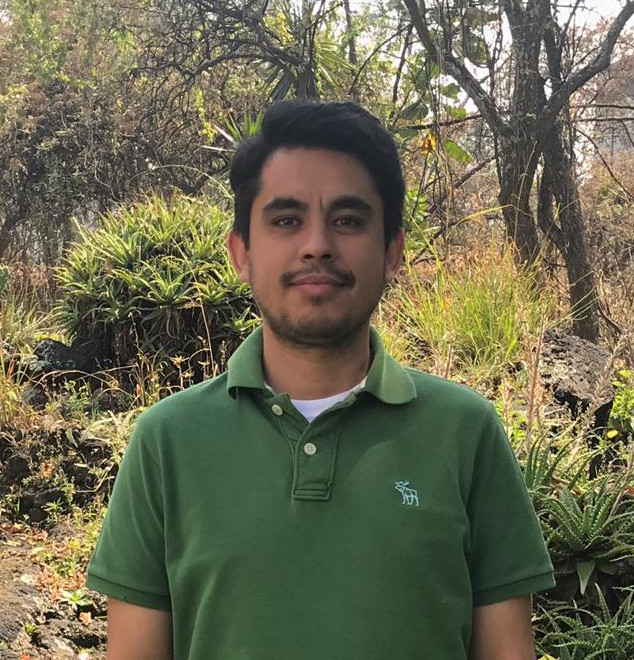
Alfredo López Olvera
Dr. López obtained his Chemistry degree from the National Autonomous University of Mexico in 2016 and later completed a master's in chemical sciences with honors, specializing in organic synthesis and supramolecular systems for CO? capture. In 2019, he received a national PhD fellowship from CONACYT and joined Ibarra's group, where he worked on designing porous organic-inorganic systems (MOFs/MOPs) and studying gas adsorption mechanisms. He collaborated internationally, contributing to studies on switchable metal sites (Chem. Mater. 2021, Angew. Chem. Int. Ed. 2022). He completed his PhD in 2023 with honors and was nominated for the Antonio Caso medal. As a professor at ITAM since 2020, he developed educational materials. Currently, he is awaiting a postdoctoral position at Stockholm University to study MOFs for water purification. In February 2025 he joined IDM-UPV as a Marie Curie MSCA-PF fellow.
Researcher: Giovanni Montà-González
-
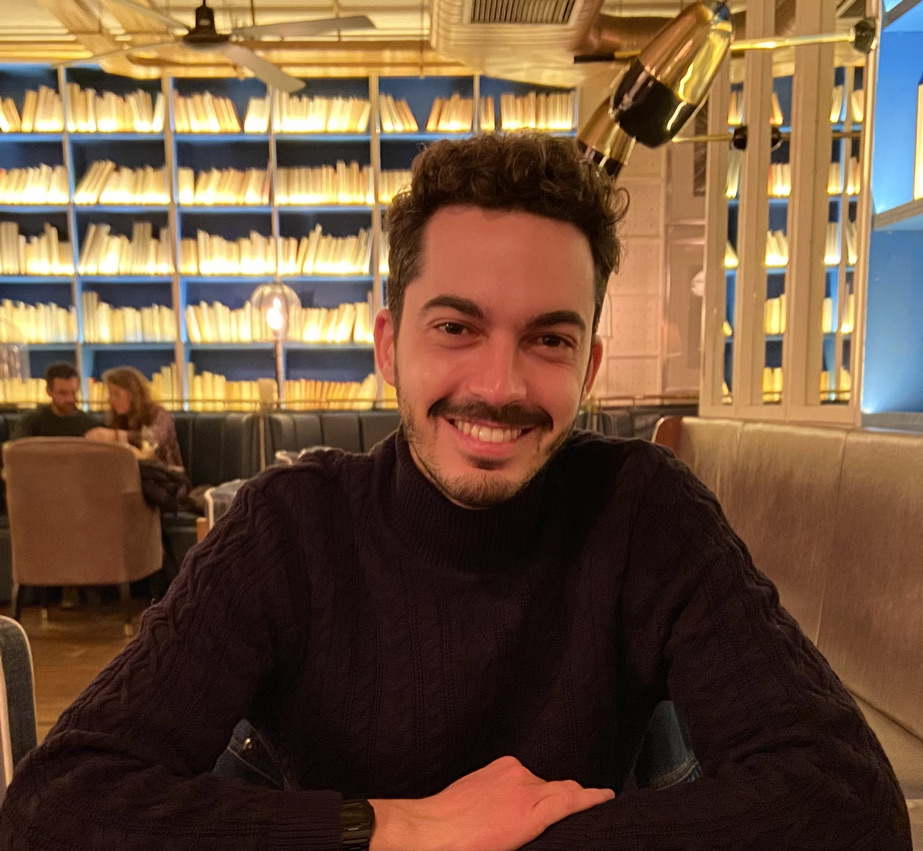
Giovanni Montà-González
Giovanni Montà-González graduated in Chemistry in 2018 (Univ. La Laguna, Spain) after defending his Degree Thesis named "Synthesis of indolizidinones via hetero-Diels-Alder reaction" under the supervision of Profs. M.M. Afonso-Rodríguez and J.A. Palenzuela-López. In 2019 he studied a MSc in Organic Chemistry (Univ. Valencia, Spain) and developed his Master Thesis titled "Preparation of a new haptenic derivative for the mycotoxin Alternariol" under the supervision of Profs. C. Agulló-Blanes and A. Abad-Somovilla. Afterwards, he joined the group of Prof. Abad and worked in the development of new immunoanalytical assays for the detection of different mycotoxins (zearalenone and deoxynivalenol) in food. In 2021 he started his PhD studies under the supervision of Dr. V. Martí-Centelles developing Organic Molecular Cages as containers for anticancer drugs.
Researcher: Eduardo Ortiz Gómez
-
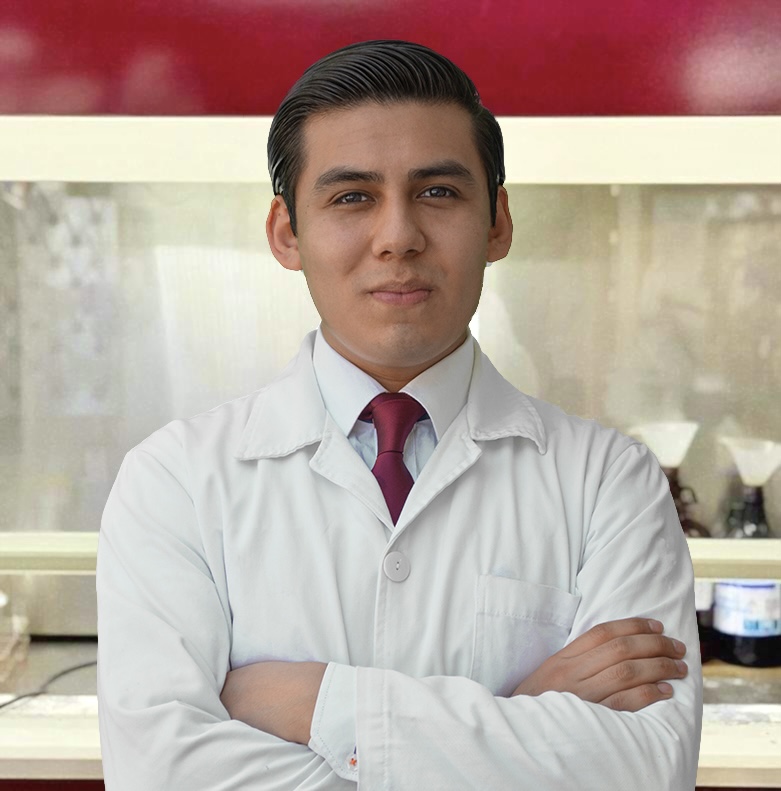
Eduardo Ortiz Gómez
Eduardo Ortiz-Gómez was trained as Chemist Pharmacobiologist (University of Veracruz) in 2018. Subsequently, He graduated with honors from a master in science with the thesis "Synthesis of new 2-substituted phosphorylated oxazolines and their in silico analysis as potential anti-inflammatory agents" under the direction of Mario Ordoñez and Ivan Romer-Estudillo (Autonomous University of the State of Morelos) in 2021. After that he was working as analyst in analytic development in the Mexican pharmaceutical industry. His career is mostly based in organic chemistry, medicinal chemistry, computational chemistry, and validation of analytic methods of organic compounds. In 2023 he started his PhD under the supervision of Dr. V. Martí-Centelles, focusing on the synthesis of organic cages for the encapsulation of anticancer drugs as new strategy in the fight against cancer.
Researcher: Rocío López Lima
-
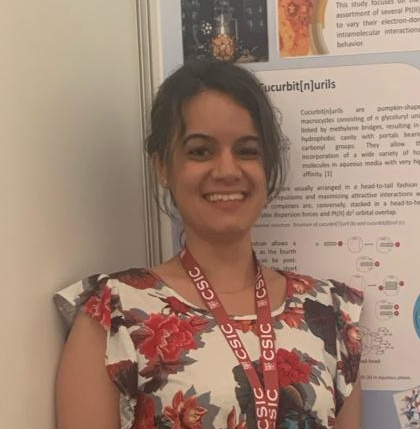
Rocío López Lima
Rocío López Lima holds a degree in Chemistry from the Central University Marta Abreu de Las Villas, Cuba (2013 - 2019). She then moved to Spain to pursue a Master's degree in Chemistry at the University of Valladolid (2022 - 2023), specializing in Advanced Techniques in Chemistry, including Analysis and Quality Control of Chemicals, where she gained experience in supramolecular chemistry. In 2023, she embarked on her Ph.D. under the supervision of Dr. V. Martí-Centelles, focusing on the synthesis of molecular cages and supramolecular systems for biological applications.
Researcher: Guillermo Luciano Fiorini
-

Guillermo Luciano Fiorini
Guillermo Luciano Fiorini graduated with a Bachelor's degree in Chemical Sciences in 2021 (University of Buenos Aires, Argentina). Throughout this period, his research focus spanned various areas of Inorganic Chemistry, including the synthesis of complexes with magnetic properties, electrochemistry in fuel cell catalysis, and the study of nanomaterials and data science. Within these latter areas, he defended his thesis titled "Design and optimization of the synthesis of micro and nanoparticles of SiO2 by the Stöber method using machine learning," supervised by Professor Sara Bilmes and Dr. Diego Onna. Additionally, he shared his research findings at various national and international conferences and contributed to the publication of two scientific articles (New J. Chem., 2019, 43, 16218 - 16225. Dalton Trans. 49, 932-940). In the educational realm, he participated in the development of an introductory workshop on machine learning for chemistry students (J. Chem. Educ. 2021, 98, 9, 2892-2898). Throughout 2023, he worked on the development of sensors for post-harvest monitoring in agriculture at the Wiagro company. At the end of that same year, he started his doctoral studies under the supervision of Dr. V. Martí-Centelles, focusing his research on the development of organic molecular cages as containers for anticancer drugs.
Infrastructure
Our research is developed at the laboratories of the Interuniversity Institute for Molecular Recognition and Technological Development located at Universitat Politècnica de València that has all the facilities to develop synthetic chemistry (lab space equipped with fumehoods, NMR, UV-Vis, fluorimeter, TGA, RX, etc.). Additionally, the research group has access as internal users to different institutions for further facilities and equipment. This includes advanced NMR, microscopy, cell culture, etc.
The Interuniversity Institute for Molecular Recognition and Technological Development was created by the Valencian Government (IDM) was created in 2015 as an Institute of Interdisciplinary Research between the Universitat Politècnica de València and the Universitat de València.
Work with us
Prospective PhD and postdoctoral researchers are welcome to contact Dr. V. Martí-Centelles by e-mail for further information and how to apply. At the moment we are looking for candidates interested in applying to a Marie Sklodowska-Curie Actions Postdoctoral Fellowships (MSCA-PF previously MSCA-IF) developing molecular cages integrating chemisrty and biology
Funding
V. M.-C. acknowledges the financial support from projects ESGENT/2024/001 and CIDEGENT/2020/031 funded by the Generalitat Valenciana, project PID2020-113256RA-I00 funded by MICIU/AEI/10.13039/501100011033, and project CNS2023-144879 funded by MICIU/AEI/10.13039/501100011033 and European Union NextGenerationEU/PRTR.
Plan Gen-T: Generació Talent, Generalitat Valenciana


Proyectos de I+D+i 2020 Angencia estatal de investigación y Ministerio de Ciencia e Innovacion

